Homepage

Sketch to Prototype: An Introduction to Designing and Developing Products
Become a Summer Trojan and earn college credit.
Program Overview
This course blends art, engineering and entrepreneurship through the lens of product development.
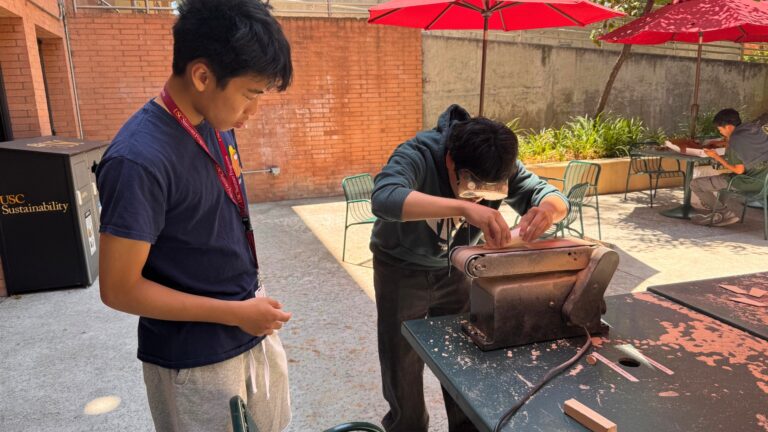
Expect to sketch, build, break and rebuild, all while discovering the magic of turning ideas into reality. Participants will learn the fundamentals of design thinking through interactive challenges.
From there, you’ll sharpen your visual communication skills with sketching techniques, 3D modeling and prototyping.
Finally, you will test, refine and brand your product, learning how to gather user feedback and exploring the business side of product design.

Key Information
Topics of Study
- Product design
- Prototyping
- Design thinking
- 3D modeling
- AI visualization
- Product branding
- Form, function and perspective
Learning Highlights
- Describe the stages of the design thinking process and how each stage contributes to developing products effectively
- Identify examples of good and bad design in existing products and articulate the reasons behind their success or failure
- Analyze user research findings to define design criteria and develop insights for product improvement
- Identify key materials and prototyping methods, including cardboard, clay, and 3D printing, and determine when to use each
- Understand how considerations such as sustainability, ergonomics and manufacturability inform product development
- Evaluate the effectiveness of iterative design through user testing and feedback
- Design a functional, user-centered product prototype that integrates research, sketching, modeling and branding strategies
Requirements
- Participants must bring their own laptops
- Participants must wear long pants and closed-toed shoes every day, as this is the required dress code to access the creator studio
Weekly Highlights
| Week | Focus | Key Topics | Assignments and Activities |
|---|---|---|---|
| 1 | Introduction to Product Design and Design Thinking | Product design; design thinking; brainstorming and idea generation techniques | Wallet redesign challenge. Use the first half of the design thinking process to brainstorm techniques for your individual project. |
| 2 | Fundamentals of Rapid Visualization | Fundamentals of sketching and shading in different perspectives; visualizing ideas through 3D modeling software and AI tools | Sketch ideas for your product. Develop digital renders of your product through modeling software and or AI tools. Present your work in critique form. |
| 3 | Prototyping Techniques and Materials Selection | Prototyping techniques and material selection; sustainability considerations in prototyping and manufacturing; ergonomic design and accessibility; iterating prototypes based on feedback | Develop working prototypes of ideas. Gain feedback and iterate on your prototype. |
| 4 | The Business and Storytelling Behind Crafting a Product Pitch | Telling the story of your product in a pitch; branding and marketing; packaging considerations | Compile a short pitch presentation on your product. |
Hear From Our Former Participants

Become a Summer Trojan